Issue 27
As accessory dwelling units continue gaining traction across Washington, real estate agents need to understand the various construction methods available to clients and how each impacts property value, marketability, and the transaction process. While stick-built ADUs remain the most flexible choice, alternatives like modular homes, manufactured homes, tiny homes, and hybrid modular components may make ADU development more affordable (affordability can be very project-dependent).
For agents helping buyers evaluate properties with existing ADUs or those who want to build an ADU, understanding these construction types is essential to providing sound guidance on value, permitting, and long-term investment potential. Of course, you are not a builder, developer, or contractor (unless you are) and this article is designed to provide you with food for thought and talking points for client conversations.
Construction Types
Modular Homes
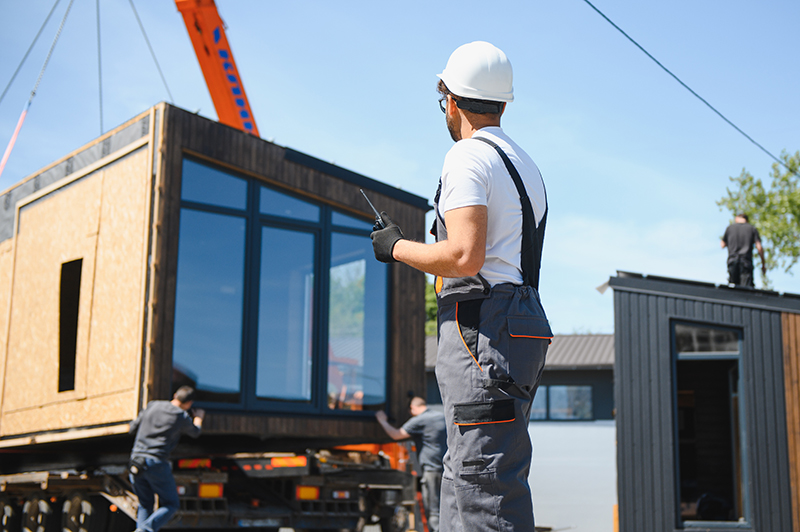
Modular construction involves building substantial sections of a home in a factory, then transporting and assembling them on a permanent foundation at the property site. These units must meet the same building codes as stick-built homes and, once installed, are virtually indistinguishable from traditional construction. For real estate purposes, modular ADUs are considered real property and should be valued comparably to stick-built units of similar quality.
The modular process can take six to nine months from design to completion depending on manufacturer or process (also note that some companies are experiencing a backlog), offering a middle ground between the speed of manufactured options and the customization of stick-built construction. Because modules are built in controlled factory conditions, quality control can actually exceed site-built standards, and weather delays are minimized.
Manufactured Homes
Manufactured homes are built in a factory according to HUD code rather than local building codes, then transported to the site. While they may offer the fastest installation timeline (somewhere in the ballpark of three to six months depending on manufacturer and process),some jurisdictions limit placement in certain zones. Also, future buyers may face higher interest rates due to the presence of a manufactured home.
Many agents may already know this, but if you are an urban agent, you may not have had much of a run-in with manufactured homes. Manufactured homes on permanent foundations may qualify as real property, but those on non-permanent foundations are classified as personal property, which can complicate financing for buyers and reduce the ADU's contribution to overall property value.
Tiny Homes
Tiny homes occupy a unique space in the ADU conversation. Tiny homes aren't strictly one or the other; they can be modular, built to local codes like site-built homes but in a factory, or manufactured, adhering to federal HUD codes (though tiny homes on wheels can bypass HUD rules). Some are also custom-built or kits (stick-built in a factory), falling under state/local rules, while some are essentially RVs. The key difference lies in the specific building codes (HUD vs. IRC) and whether they're on wheels or a foundation. Those built on trailers and that are not permanently attached to the land, make them personal property rather than real property in most cases. This means they typically don't add value to a property, even if they're being used as rental units or guest quarters.
You can read more on Tiny Homes here: https://www.iccsafe.org/tinyhomes/
Modular Components and Hybrid Construction
An emerging middle ground between fully modular and stick-built construction involves using modular wall panels, roof trusses, or other factory-built components that are assembled on-site with traditional construction methods. This hybrid approach can reduce construction time compared to full stick-built while offering more design flexibility than complete modular units.
These systems navigate transportation constraints more easily than full modules since components are smaller and can be more readily customized. From a real estate standpoint, hybrid construction should be treated like stick-built, as the final product meets local building codes and is constructed on-site.